 |
|
|
buber.net > Basque > Features > Books > Book Review: Picasso's War by Russell Martin
For security reasons, user contributed notes have been disabled.
Book Review: Picasso's War by Russell Martin
by Blas Pedro Uberuaga June 28, 2003
Read: May, 2003.
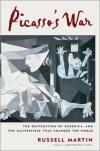 This book tells the story of Guernica, the famous painting by Picasso.
It tells the complete story, starting with the events that lead to the
creation of the painting and following Guernica as it moves from
museum to museum, becoming ever more the important symbol it has
become today. In the telling of the story of Guernica, we come to
understand better the current political climate in Spain and the
Basque Country, and why things are still so difficult in the region,
why some things have been so difficult to forgive. This book tells the story of Guernica, the famous painting by Picasso.
It tells the complete story, starting with the events that lead to the
creation of the painting and following Guernica as it moves from
museum to museum, becoming ever more the important symbol it has
become today. In the telling of the story of Guernica, we come to
understand better the current political climate in Spain and the
Basque Country, and why things are still so difficult in the region,
why some things have been so difficult to forgive.
Any history of the painting Guernica necessarily starts with the town
of Gernika and the Spanish Civil War. This book does an amazing job
of recounting that market day when the town was destroyed by German
bombers, when the fleeing citizens where gunned down by machine
gunners flying overhead. A sense of outrage filled me as I read the
description of that day -- a description based on accounts of people
that were there -- an outrage that left me angry at both the
governments that did this and those that let this happen by ignoring
events in Spain. Even though I was only reading about this horrific
event nearly 65 years after it happened, I still felt an anger that
can only pale to that felt by the people that went through this, who's
grandparents were there, and it helped me understand why people are
still angry today.
After the bombing comes Picasso's creation. The book follows the
efforts of the Spanish Republic to get Picasso to paint something for
its exhibit at the world fair in Paris and the creative process that
led to Guernica. We follow the painting from Picasso's studio, to the
world's fair, to New York where it is held in safe keeping until
democracy returns to Spain, and finally to Madrid, where it currently
resides. We learn that efforts to get the painting to the Basque
Country, to be displayed near the site that inspired it, have been met
with rejection. That this symbolic act of reconciliation between the
Basques and the Spanish government has yet to occur.
The story of Guernica is very much a history of the modern Basque
Country. Guernica has become the modern symbol of the horrors of
warfare, resonanting not only with the Basque people, but also with
the Japonese, the Germans, and other peoples who have first hand
witnessed these horrors. It is a telling fact that the US asked a
reproduction of Guernica at the UN to be covered when the resolutions
on military action in Iraq were being brought to a vote. This
painting symbolizes all that is horrible and aweful in war, all of the
suffering that occurs. In telling the story of the painting,
Picasso's War reminds us that all wars result in suffering, and that
forgiveness is not easy.
This page is part of Buber's Basque Page and is maintained by Blas Uberuaga.
Please report any problems or suggestions to Blas.
Eskerrik asko!
|
|
 |


