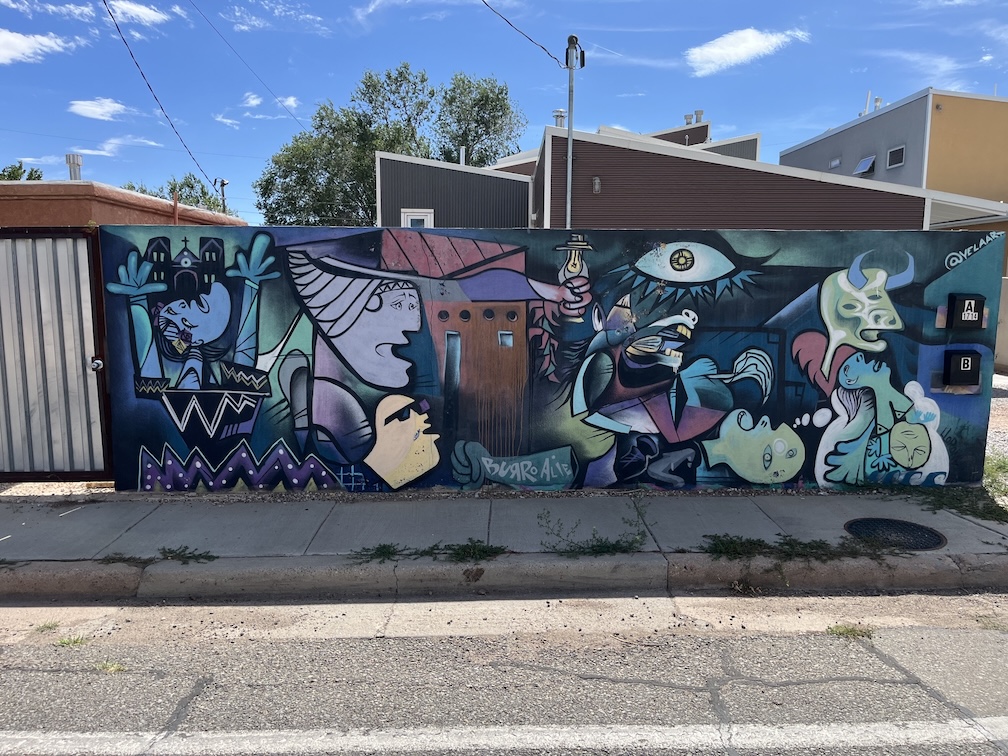
Basque Fact of the Week: The Basque Connections of the Valley of Aran

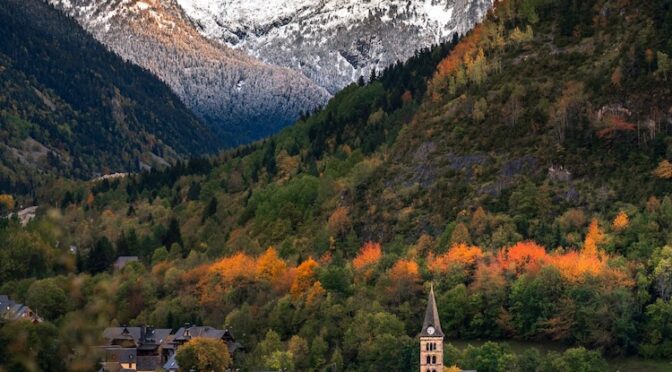
The Val d’Aran, or Valley of Aran, lies in the northwest corner of Catalunya. As such, it is a bit of an outlier. It is the only part of Catalunya that sits on the northern side of the Pyrenees. It has its own language, Aranese, that is co-official with Spanish and Catalan. The region also has a strong historical connection with the Basques. In fact, its name comes from the Basque language.
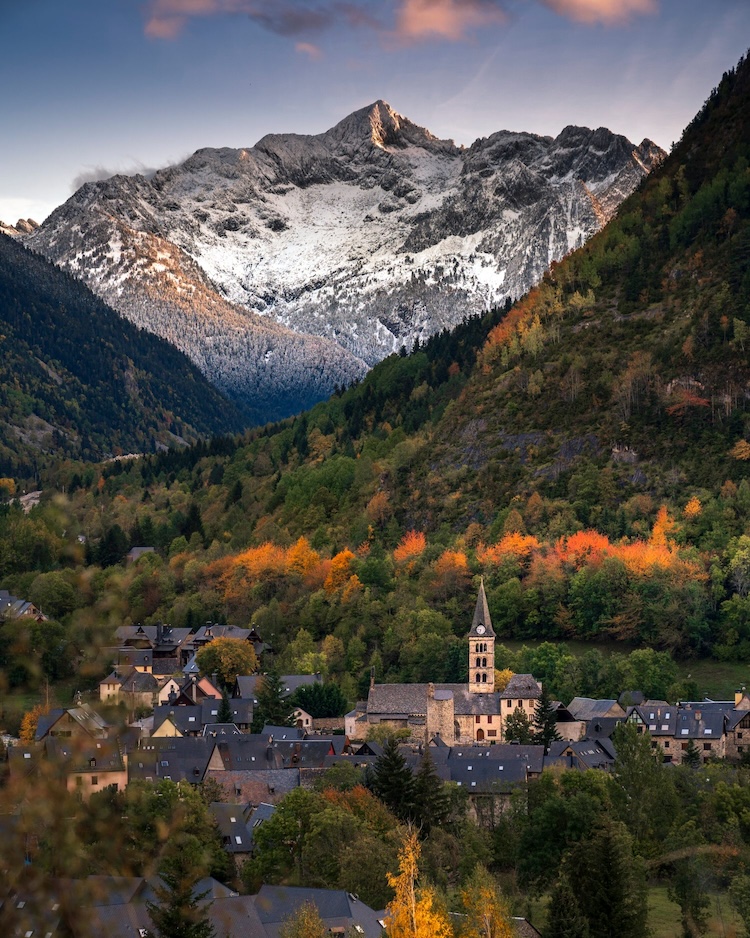
The Valley of Aran. Photo from Active Traveler.
  • The Valley of Aran, called Val d’Aran in the local dialect of Occitan Aranese, owes its name to the Basque language. Aran comes from the Basque word haran, which means valley. So, Valley of Aran is a tautotoponym, or a place name that has the same word twice: Valley of the Valley.
  • In Escunhau, one of the towns of within the Valley of Aran, there sits a church with the words ILVRBERRIXO / ANDEREXO inscribed on a piece of a tombstone that was discovered in 1881 within the walls of the church. (The current inscription is a replica of the original, which was removed and placed in a museum.) The original inscription dates to Roman times. These are ancient Basque or Aquitanian names.
  • There are a number of toponyms of Basque origin in the area, pointing to the fact that Basque was spoken at least this far at some point in history. To highlight just a few (a bigger list can be found here): Benabarre, Zoriza, Lascuarre, Axpe, Javierregay, Isabena, Barasona, Hirbike, Ballobar, and Urria.
  • Saint Faith, Santa Fe in Spanish and Sainte Foy in French, was killed in this valley. She was a young girl of just 12 or 13 who was first roasted and then beheaded for defending her Christian beliefs in the late third or early fourth century. At least one reference says that she was killed “among her fellow Basques” (though there she is called Saint Eusebia). I haven’t been able to find much more about her potential Basque connection, but the song that recounts her life, the Song of Saint Fides, says that the Basques know this song/story well.

A full list of all of Buber’s Basque Facts of the Week can be found in the Archive.

Primary sources: Arango harana, Wikipedia; Val d’Aran, Wikipedia

Basque Fact of the Week: Rights of Women in 1500s Bizkaia

The New Fueros of Bizkaia were approved in 1526 – 500 years ago this year. These fueros codified the customs and practices of the people of Bizkaia – it didn’t establish any new laws per se, but formalized those that already existed. Elixabete Piñol Olaeta looked back at how specifically women were mentioned in those fueros, finding that they had quite a strong legal standing for the time.
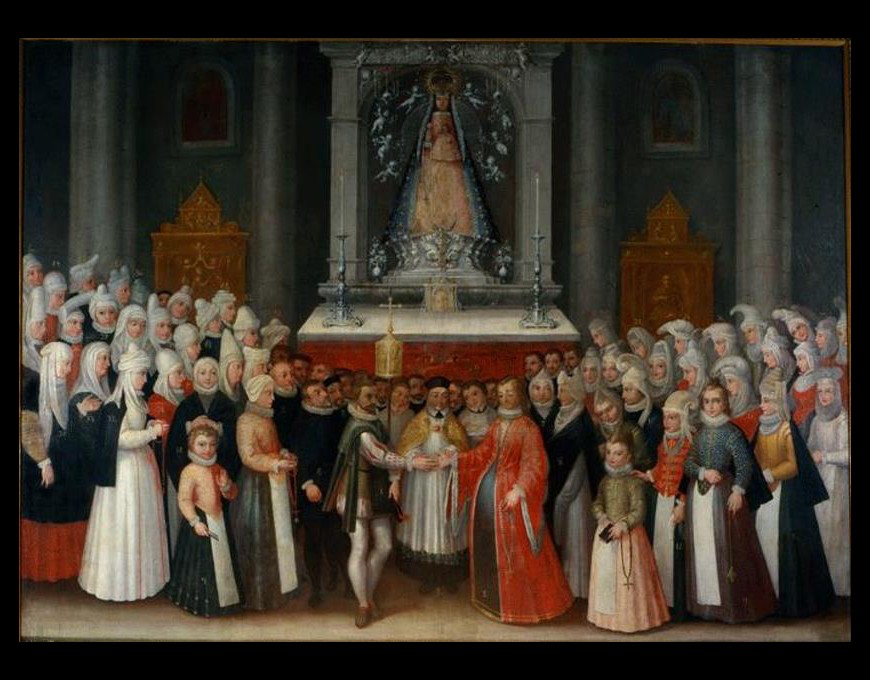
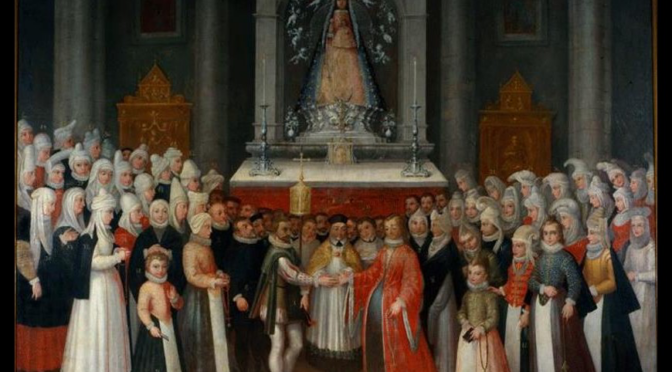
The 1607 painting Boda de hidalgos en Begoña by Francisco de Mendieta y Retes. Image from the Museo Virtual de Ecologia Humana.
  • The family structure as codified in those fueros was quite egalitarian. Women had almost identical rights as men. They shared equally in the family assets. That is, the husband wasn’t in control of the family assets but rather the husband and wife each held a 50% share. This is regardless of what they brought into the family at the time of marriage.
  • The husband couldn’t sell joint assets without explicit permission of the wife. If the husband got into debt somehow (such as gambling), it was explicitly prohibited from seizing the woman’s part of the assets to pay that debt. It was recognized that the wife needed those assets to keep the rest of the family functioning.
  • The dowry wasn’t just a responsibility of the woman. In fact, who paid the dowry depended on who joined whose family – the etorkina. If the man joined the woman’s family at her baserria, for example, the man paid the dowry. What each person brought into the family was documented and notarized.
  • The heads of households could choose any child as an heir. It didn’t have to be the first born and it didn’t have to be a male. Rather, they were to pick the “most suitable, capable, competent, or advantageous to the House to inherit.” Importantly, they could pick a sole heir so that the family property and wealth was not broken up into smaller and smaller parts.
  • The exception to this is if the husband or wife died without a will, in which case their assets were split amongst all children equally. To avoid the fragmentation of their assets, the couple would often grant each other authority to make choices about heirs in their marriage contract. In the case that the man had died, the women had full authority to choose the family heir.
  • While the age of majority was 25 at the time, once either a man or woman reached the age of 18, they could petition for emancipation from guardianship.
  • Either the husband or wife could dispose of their share of their assets without permission of the other. Or they could “jointly give, donate, or bequeath their property to one of their many children.” The point is, they could do either and one spouse didn’t have to have permission of the other.
  • As there weren’t enough scribes to wander the mountains and help couples prepare wills, it was allowed for the couples to prepare their own but they had to have three witnesses. One had to be a woman. The rationale was that a woman provided “a guarantee and safeguard for the truthful, loyal, and faithful transmission of the testator’s final wishes.”

A full list of all of Buber’s Basque Facts of the Week can be found in the Archive.

Primary sources: La mujer en el Fuero Nuevo de Bizkaia de 1526 by Elixabete Piñol Olaeta, Deia

Basque Fact of the Week: Composer Maurice Ravel

I’m a metalhead. I like my music loud, aggressive, and angry. However, I have a soft spot for anything Basque, including Ravel. Perhaps the only classical CD I’ve ever owned was a compilation of some of Ravel’s greatest pieces, including Boléro.
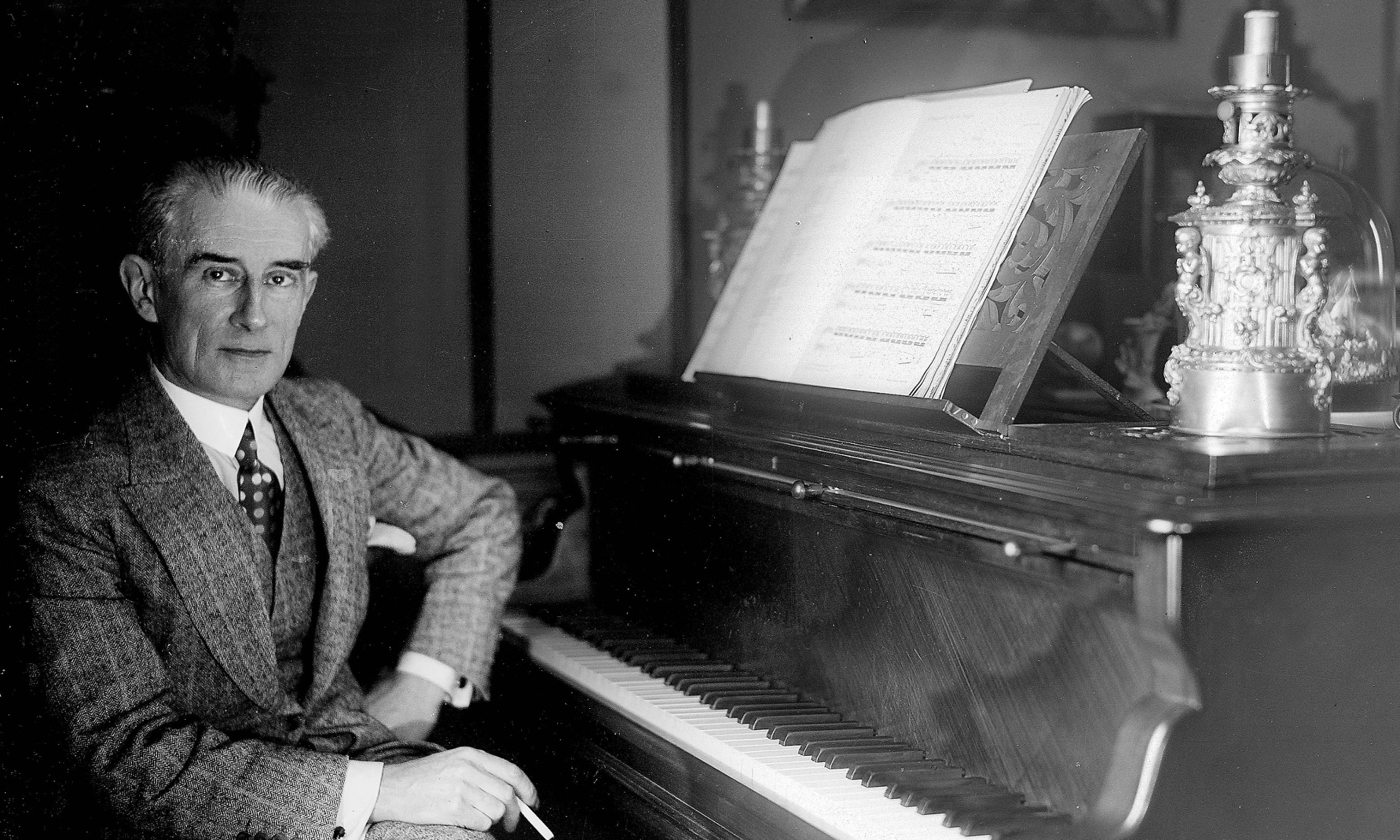
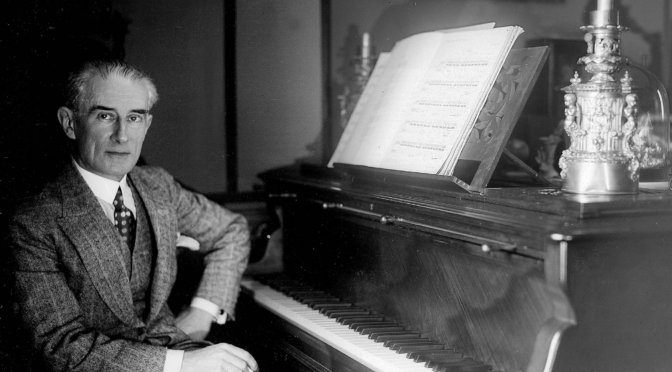
Maurice Ravel sitting at his piano with his ever-present cigarette in hand. Photo found on The Listener’s Club.
  • Joseph Maurice Ravel was born in the Basque village of Ziburu (Ciboure in French), in the province of Lapurdi, on March 7, 1875. His father, Joseph, was a Swiss engineer. His mother, Marie Deluarte or Delouart, was from Ziburu herself though she grew up in Madrid. Shortly after Maurice was born, the family moved to Paris.
  • When Maurice was 14 years old, he entered the Paris Conservatory. He had begun playing the piano when he was 7, which was a talent cultivated by his father. Indeed, his father had been a pianist himself and had even attended the Conservatory in Geneva before deciding on a career in engineering. Maurice began taking piano lessons with Henri Ghys and a few years later began studying harmony with Charles-René. His earliest compositions date from this time.
  • Ravel won the Conservatory’s piano contest in 1891. Other students outshone him as a pianist but he really started to grow as a composer. However, he was a student that marched to his own beat and didn’t take lessons well. In 1895, he was expelled from the Conservatory, after which he focused on composing. A few years later he was readmitted to the Conservatory where he studied composition with Gabriel Fauré. However, he ran afoul of the director of the Conservatory and was again expelled in 1900.
  • The first few performances of his compositions were met with mixed reviews. However, Ravel genuinely only cared about one critic – himself – and so these did nothing to dissuade him in his endeavors. From 1901 to 1905, Ravel competed for the Prix de Rome, the top prize for young composers, but never won. The last year he competed, he was eliminated in the first round, which caused a scandal and led to significant reorganization of the Conservatory. His first concert outside of France, in 1909 in London, was received favorably.
  • Ravel’s first opera debuted in 1911. Its theme – a bedroom farce – was only moderately well received by the opera-going public but it gained more popularity in the 1920s. A year later, he had three ballets debut. One was met with outstanding success but others had a more mixed reception.
  • A few years later, World War I broke out. Ravel tried to join the French Air Force but was rejected because of his age and a small heart issue. At the age of 40, he was finally admitted as a truck driver. Amongst other duties, he delivered munitions during German bombardments. His health, already less than ideal due to hard work on his compositions, declined further as he suffered from both insomnia and digestive issues and, later, frostbite. His health, both mental and physical, deteriorated further when his mother died in 1917.
  • As some in France responded to the war by wanting to ban performances of German music, Ravel objected that it would lead to isolation of French musicians. In response, his own music was banned.
  • After the war, Ravel continued composing though his output diminished to roughly one piece per year. During this time, he started incorporating elements of jazz into his pieces as well. At the end of the 1920s, he composed his most famous piece, Boléro. It was well received, partially to Ravel’s chagrin as he claimed it had “no music in it.”
  • In the early part of the next decade, he wrote a piece for pianist Paul Wittgenstein who had lost an arm in the war. The piece was written for just one hand and became regarded as a great work.
  • In 1932, Ravel was in a taxi accident where he damaged his head. He had already been experiencing memory issues and this injury exacerbated them. He stopped composing. After a failed surgery to try to alleviate the symptoms, Ravel died on December 28, 1937.
  • In all, Ravel composed some 85 pieces, several unfinished or incomplete. One of those was a concerto with Basque themes, a reflection of the influence his mother had on his life and imagination.
  • While Ravel declined all state honors from France, he did accept a number of foreign awards, including an honorary doctorate from the University of Oxford. After he died, his brother Édouard turned Ravel’s country home into a museum, which still operates today.

A full list of all of Buber’s Basque Facts of the Week can be found in the Archive.

Primary sources: Maurice Ravel, Wikipedia; Mazorra Incera, Luis; Ravel Deluarte, Maurice. Auñamendi Encyclopedia, 2026. Available at: https://aunamendi.eusko-ikaskuntza.eus/en/ravel-deluarte-maurice/ar-124708/; Maurice-Ravel.net

Basque Fact of the Week: Txomin Letamendi – Musician, Soldier, Spy

Hard times brings out the best and worst in people, pushing them in directions they may never have ever imagined. Such is the case of Txomin Letamendi. An extremely talented musician, the Spanish Civil War and its aftermath pushed him to become first a soldier and then a spy for the Basque government in exile, a role that would ultimately cost him his life.
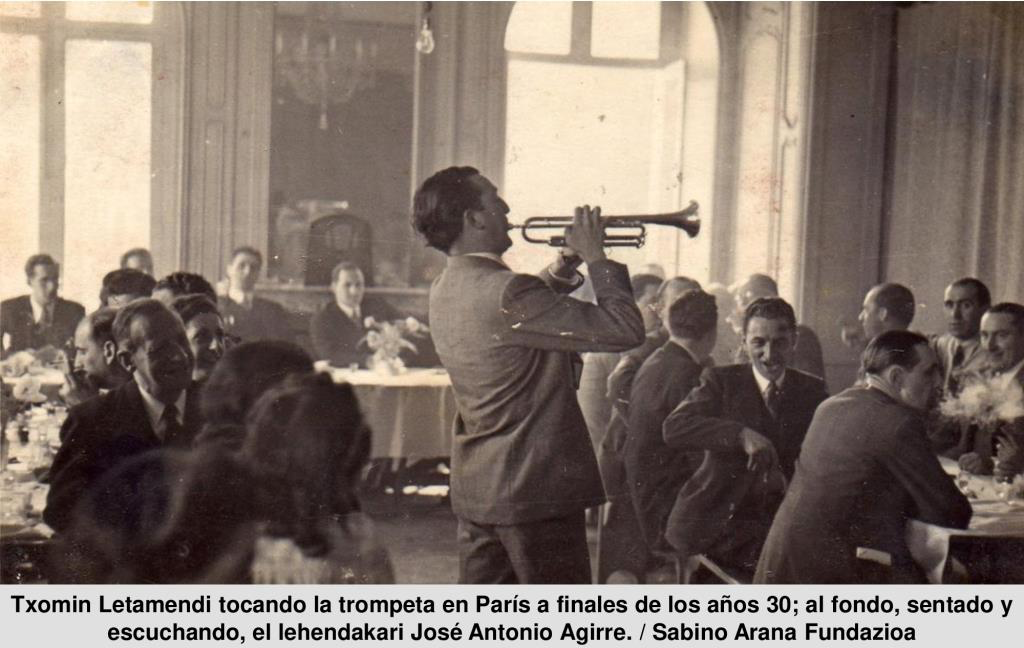
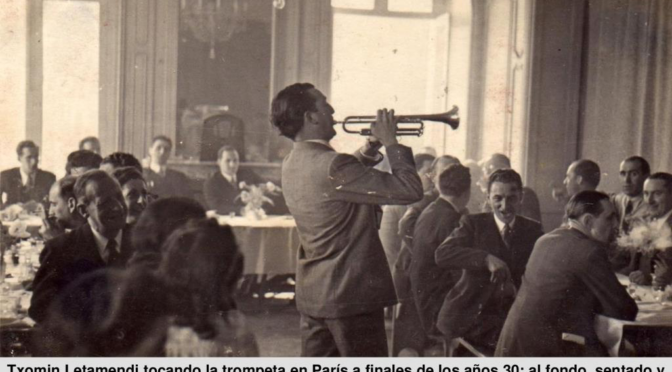
Txomin Letamendi playing the trumpet in Paris in the late 1930s; Lehendakari José Antonio Agirre is in the background. Photo from Deia.
  • Txomin Letamendi Murua was born in Bilbo in 1901. His family originated from the Oñati region. His father abandoned the family when he was young and his mother ran a bakery in Bilbo.
  • Txomin was a skilled musician. He played multiple instruments, including the double bass, guitar and oboe, but the trumpet was his main instrument. As a young man, he secured a place in the Bilbo Symphony Orchestra as a trumpeter where he played with, amongst others, Maurice Ravel. In the evenings he would play in cafes, eventually forming a jazz band with some friends. In 1923-24, he played in New York City, including at Carnegie Hall, where he acquired his prized possession, his Conn Silver Trumpet.
  • Knowing the mountains of Bizkaia, he joined the Aritzimuño battalion of the Basque Army when the Spanish Civil War broke out. He was part of the anti-aircraft defense during the air raids on Bilbo in 1936. Later, he became the commander of the battalion, commanding some 600 soldiers, who participated in battles near Vitoria, Otxandiano, Gorbeia, Barazarre, Sollube, and Lemoatxea. He was well regarded by his soldiers and during the defense of Bilbo he climbed the walls and played Agur Jauna on his trumpet. When Bilbo fell, Letamendi went into exile in Paris.
  • In Paris, he found a job as a trumpeter in a tango orchestra at an Uruguayan establishment. He made contact with the musical group Eresoinka which, commissioned by the Basque lehendakari in exile José Antonio Agirre, acted as a cultural embassy for the Basque Government, promoting and preserving Basque culture. It was during this time that he met Karmele Urresti, a nurse from Ondarroa, who would become his wife. Their first daughter was born in Paris but when Paris was about to fall to the Nazis, Eresoinka was dissolved and Letamendi and his family fled to Venezuela.
  • In Venezuela, Letamendi began work in the intelligence services. Still playing his trumpet, he made contact with many people, including the ambassador of Franco’s government, Letamendi was recruited by the United States Office of Strategic Services to gather information on the Venezuelan government, the Nazis who were settling there, and the Franco embassy.
  • A key goal was to determine the Venezuelan government’s attitude towards the Nazi government of Germany. Having a good relationship with the Spanish ambassador, Letamendi and his band invited him to a special performance, where they stole his keys, entered the embassy, and stole documents from the safes; they returned the keys before the performance was done. This revealed that Spain had been helping Nazis escape Europe, smuggling diamonds, and participating in money laundering.
  • At this time, Letamendi was ordered by Agirre to return to Spain and work for the Basque government’s clandestine intelligence service. The family eventually made their way back to Bilbo by way of Barcelona and Ondarroa. He coordinated teams of informants in both Bilbo and Madrid. In 1946, he fled to Donostia to avoid the secret police. He was captured trying to retrieve a package at the Donostia train station. He was arrested, tortured, and sentenced for two years. While in prison, his third child was born.
  • Upon his release, he took over as the clandestine representative of the Basque Government in Barcelona. He was soon arrested again. Fearing this was his last arrest, he asked his wife to raise their children with patriotism and the Basque language, which he himself did not know. He was brutally tortured. His extremely bad health, due to torture and a hunger strike, led to an early release in 1950. He died a few months later in his home in Madrid at the age of 48.
  • Txomin and Karmele’s story was the subject of Kirmen Uribe’s book The Time to Wake Up Together which was then turned into the movie Karmele, directed by Asier Altuna. There is an effort to make his prized trumpet an official piece of Basque heritage by displaying it in a museum.

A full list of all of Buber’s Basque Facts of the Week can be found in the Archive. Help with translation was provided by Google Translate.

Primary sources: Txomin Letamendi, Wikipedia; Un siglo de Euskadi a través de una icónica trompeta by Iban Gorriti, Deia


Basque Fact of the Week: Knowing Multiple Languages Makes Your Brain Younger

People in the Basque Country are inherently multilingual. Surrounded by Spanish and French, and with their own language Euskara, many also learn English. A recent study has revealed that being multilingual, especially if you speak four languages, has a tremendous benefit for your brain, making it up to thirteen years younger than people who only speak one language.

Image from Nautilus describing this work. Ironically, they don’t have Basque represented…
  • This work has three aspects. First, the research team compared the age of people’s brains across 27 European countries in a study that spanned some 86,000 people. In that first study, they found that countries with a higher level of multilingualism – with a greater number of people speaking more than one language – had populations that experienced less accelerated aging of their brains: their brains didn’t age as fast. And, the more languages spoken, the greater the effect. They conclude that, even when someone is speaking only one language, they still have to control those other languages in the background and that makes the brain work harder (my words, not theirs).
  • This study was followed up by another in which they looked at individuals, not country-wide populations. This work was recently presented by Dr Lucia Amoruso from the Basque Center on Cognition, Brain and Language in Donostia, The team started with measuring the age of brains in a random selection of people to calibrate brain age. They used a set of 728 people to develop a “brain age clock” with the combined use of neuroimaging – specifically magnetoencephalography – and artificial intelligence. This brain clock essentially says what the typical age of someone’s brain is for their real age and other factors. This established a baseline to measure deviations from the normal, if you will.
  • And this is where the Basque connection comes in. They then compared this model against the measured age of brains of a group of 144 people from the Basque Country. The Basque Country was chosen because of the relatively high level of multilingualism and the high variance in multilingualism. Of those 144 people, they had equal numbers that spoke one, two, three, or four languages: Basque, Spanish, French, and/or English.
  • What they found is that people who speak two languages have brains that are about 6 years younger than what would be expected for their age. If you speak three, you gain 7 years. Four languages gives you 13 years. Thus, they found a huge benefit for in brain age as you speak more and more languages.
  • They also found that you have to have high proficiency in the languages and speak them from an early age to get the most benefit. So kids that routinely speak multiple languages will see the most impact.
  • Why does this matter? Not only does it show how speaking multiple languages helps with brain health, but it also suggests how societies can improve the overall brain health of their people by promoting multilingualism in education. It also has relevance for potentially mitigating the effects of diseases like Alzheimer’s that are characterized by brain deterioration. There is a lot of work to do before it gets that far, but it offers one route to help limit the effects of such diseases.

A full list of all of Buber’s Basque Facts of the Week can be found in the Archive.

Primary sources: Amoruso, Lucia, Hernan Hernandez, Hernando Santamaria-Garcia, Sebastian Moguilner, Agustina Legaz, Pavel Prado, Jhosmary Cuadros et al. “Multilingualism protects against accelerated aging in cross-sectional and longitudinal analyses of 27 European countries.” Nature aging (2025): 1-15; Speaking More Languages May Help Slow Brain Aging by Jake Currie, Nautilus; Learning another language appears to slow brain ageing, scientists say by Anna Bawden, The Guardian

The Price of Liberty: An Interview with Begoña Echeverria, Annika Speer, and Jacqueline Postajian

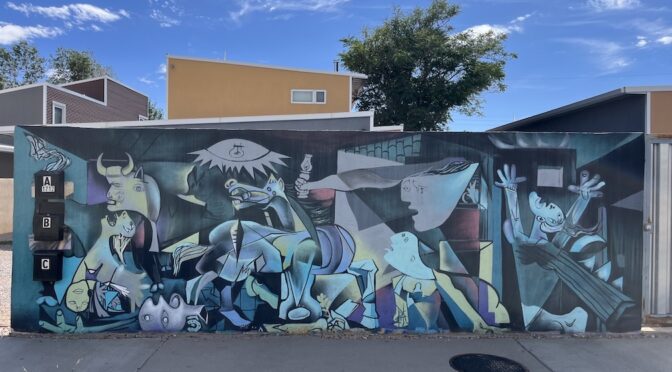
Begoña Echeverria is the daughter of Basque immigrants to southern California. A native Basque speaker with a PhD in sociology, she is a Professor at UC Riverside’s School of Education. Her research on Basque language, culture and identity has appeared in academic journals in education, sociolinguistics, anthropology, history and folklore. Begoña has published “Witches” and Wily Women: Saving “Noka” Through Basque Folklore and Song,” and is also a singer-songwriter with the Basque-American trio, NOKA. Her historical novel, The Hammer of Witches, loosely based on the 1610 burnings of Basque “witches” from the Baztan Valley in northern Spain from which her family hails, was the Historical Novel Society’s Editor’s Choice for May, 2015. Other creative works include Apparitions, inspired by the supposed sightings of the Virgin Mary in the Basque Country in the 1930s, and the play “Picasso Presents Gernika,” staged at United Nations headquarters in New York City in 2023 to commemorate World Refugee day.  

On April 26, 1937, the Basque city of Gernika was bombed. This, and other disastrous events during the Spanish Civil War, led to thousands of Basque children being evacuated from the Basque Country. In their play, Picasso Presents Gernika, playwright Dr. Begoña Echeverria and creative director Dr. Annika Speer, both professors at the University of California, Riverside, explore the human toll that the bombing, the war, and the evacuation had, particularly on the children. In this interview, they discuss the origins of the play, why a docudrama was the right way to present this story, and how the collaborative experience keeps evolving in unexpected directions.

With Jacqueline Postajian, a screenwriter and director from Los Angeles, they have turned their play into a film, Children of Guernica. They are in the final stages of filming and production. More details about the film and an opportunity to help with fundraising for the film can be found their Creative Visions site.

Buber’s Basque Page: Let’s begin with a little introduction. Can you each introduce yourselves and say a few words about how you found each other for this project?

Begoña: I am the daughter of Basque immigrants who settled in Chino, CA. I am also the Faculty Director of University Honors at UC Riverside, and a Professor in the School of Education. I met Annika through our colleague Bella Merlin, who’s featured in both the play and the film. I met Jackie through Mario Verlangieri, a music producer with whom I’ve been recording Basque songs.

Annika: I’m a professor in the Department of Theatre, Film, and Digital Production. My colleague and friend (Acting Professor Bella Merlin) initially put Begoña and me in touch because she knew we would have a lot to discuss. Begoña had written Picasso Presents Gernika, a docudrama play, and I wrote my PhD dissertation on docudrama. After years of collaborating on the play we knew we wanted to make a film. Since neither of us are film directors we were searching for the right collaborator and Mario put us in contact with Jackie.
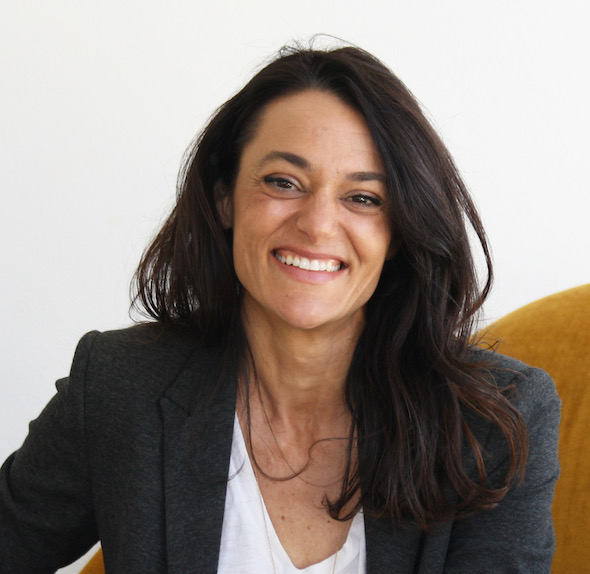
Dr. Annika Speer is a Professor of Teaching in the Department of Theatre, Film, and Digital Production at UC Riverside where she runs the public speaking program. She is the Co-Director of the Public Speaking Initiative, a UC-Wide program based out of UC Santa Barbara that prioritizes interdisciplinary training in speech and rhetoric. She prioritizes communication pedagogy through close work with numerous campus programs, providing a large variety of public speaking workshops for the Graduate Student Resource Center, the Chancellor Research Fellows, the Science to Policy Certification Program, and the Social Entrepreneurship Engagement and Development (SEED) Lab, to name but a few. Speer is also supporting faculty of the Medical Health and Humanities Studies (MHHS) program: https://anthropology.ucr.edu/minors/mhhs
In addition to academic work, Speer works as a dramaturgical researcher and script consultant for film, most recently for The Girl on the Train (2016), Men, Women & Children (2014), Walking Stories (2013), and Call Me Crazy: A Five Film (2013). She has directed plays as fundraisers for Women Help Women, Planned Parenthood, and Pacific Pride Foundation with the mission to generate collaborative, creative, and activist oriented theatre. 

Jacqueline: I’m a screenwriter and director from Los Angeles. I’ve been working in entertainment for nearly ten years and have completed two short films. Mario was the sound mixer on one of my previous short films, Souvenir Drunk, and I was delighted and honored that he suggested me for the job. After watching the recorded version of the reading of Picasso Presents Gernika at the United Nations, I immediately knew I wanted to help tell this story. 

BBP: That Children of Guernica is happening must mean that the reception of your play Picasso Presents Genika was quite exceptional. How does it feel that your play was so well received? What was most surprising about how people responded to Picasso Presents Gernika?

Begoña: It’s very gratifying but also a little disappointing; I would prefer that the themes of the play were no longer relevant. It’s been surprising — and sobering — to see the connections audiences have made between this little-known Basque story from almost 90 years to their own stories of displacement or family separation in far-flung locales in the present. But it’s also been surprising to see how the play seems to bring closure for some Basque descendants of the evacuees, and has elicited stories from the families of survivors that I’d never heard before. This has inspired me to keep telling this story. 

Jacqueline Postajian is an American indie filmmaker, screenwriter, and podcast host based in Los Angeles. She is best recognized for directing narrative short films centered around community dynamics and her work analyzing cinema history. Postajian was born and raised in Los Angeles, California. She later attended the University of California, Los Angeles (UCLA), where she earned a degree in Applied Linguistics. Her creative work focuses heavily on human connection, cultural subcultures, and genre experimentation.

BBP: Clearly you’ve told at least part of the story in Picasso Presents Gernika. What motivated you to extend the story to a film?

Annika: Initially we had additional theatrical events planned for the play, but COVID happened, theatres closed, and the opportunities we were looking forward to unfortunately were no longer available. In that moment, I suggested that we edit the filmed version of the staged reading so that we could still allow the story to reach audiences. We were delighted with the reception that we had for the story (at universities, museums and cultural centers, conferences etc.). However, a filmed version of a staged reading is not the most artistically engaging form of storytelling. This inspired us to take the seed of Begoña’s original play but adapt it into a script intended specifically for film. Although we are passionate about theatre, it is a more ephemeral medium, and we loved that film gave us the chance to work with the story from a different angle and to reach a broader audience. 
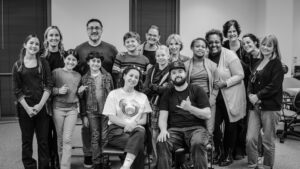
The cast and crew of Children of Guernica.

BBP: In your view, why is it important to tell this story now?

Jackie: In a moment when histories of war and displacement are repeating themselves across the globe, Children of Guernica unfortunately remains relevant as ever. Film is and always will be an empathy machine. As audience members follow the journey of one Basque child refugee into adulthood, we hope to remind them that the most vulnerable, women and children, often pay the heaviest cost in war and conflict universally. Recent events have shown us how fragile and hard-won freedom is. One of the things I love most about Children of Guernica is the sacrifice at the center of the narrative. By telling this story, I hope to deepen public understanding of the human price of liberty—and the strength it takes to choose freedom for someone else, even when it means losing them.

Here is a trailer for the film.

Basque Fact of the Week: The Wandering Pasta Makers

During tough times, people find a way. The aftermath of the Spanish Civil War was brutal for many. In the Basque Country, and beyond, the resulting food shortages led enterprising folks to devise new ways to make and deliver food. One curious – to me – example is the wandering noodle men or fideogile ibiltariak. They would wander from village to village and make batches of pasta to sell to the locals. I imagine that this kind of thing happens everywhere when times are tough. For example, I would think it happened during the Great Depression – does anyone know of similar things that happened in the United States?
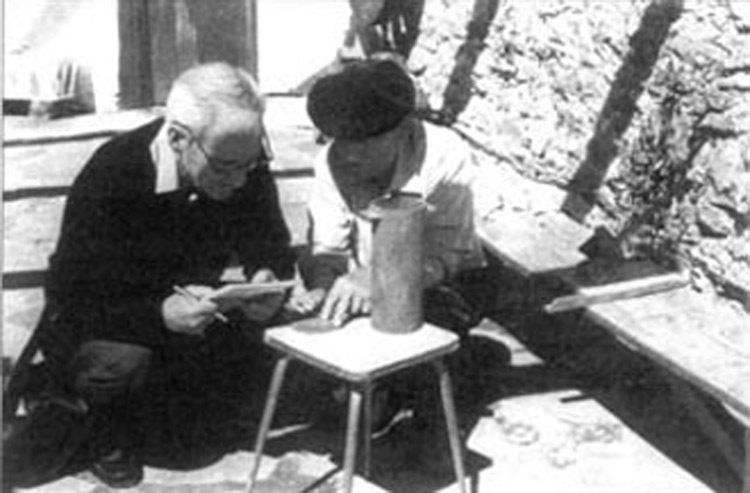
Segundo Lopez de Arana and Julen Zabaleta discussing how the machine for making noodles and macaroni works (Photo by Isidro Saenz de Urturi 04/2002, from Gipuzkoako Foru Aldundia).
  • After the Spanish Civil War, times were tough for people. There were severe food shortages and food and other supplies were rationed. However, as in all times, hard times create opportunities for some, and the food shortages led to wandering pasta makers, who were quite prolific until the 1950s when things started to improve in Spain.
  • Many pasta makers – fideogile in Basque – worked out of their own home so didn’t wander. But there were others that moved from town to town – fideogile ibiltariak – working in the kitchens of baserriak and houses of their customers. Usually, pasta making was a secondary job for these people, supplementing the income they made from their main job.
  • The first itinerant pasta makers in the Basque Country were from Asturias and Valencia. Making their way first to Araba, they would go door to door and sell their services. They brought with them machines to make pasta and enterprising young Basques learned to copy these machines and make their own. It was a hard job making these machines as they didn’t have good supplies for parts. They had to salvage materials from scrap.
  • Not only was making the machines hard, but so was making the noodles themselves. Flour was in short supply and often had to be smuggled. The customer was responsible for getting the flour. Making the dough was the hardest part, “because it had to be thick. If it came out thin, the work could go to hell.”
  • When people from a certain village wanted to hire the services of the traveling pasta makers, or the fideoen gizona – the noodle man – they might put an ad in a newspaper. When the noodle man came to town, his arrival was announced by the pealing of the bells. A typical order was for 2-20 kilograms, or 4-40 pounds. However, some people acted as resellers, ordering more than 200 pounds of noodles to sell in Bizkaia and Gipuzkoa.

A full list of all of Buber’s Basque Facts of the Week can be found in the Archive.

Primary sources: Fideogile ibiltariak, Gipuzkoako Foru Aldundia

Basque Fact of the Week: The Zahato, or Bota Bag

I remember my dad having a bota bag around. I don’t remember him using it much, but it was one of the few things from the “old country” that he had around the house. Maybe when he was a sheepherder, he used it more – I don’t know. But, for me as a child, it was one of those symbols of the Basque Country and this strange place dad came from. And, when I was older, I had to get one of my own. It also doesn’t get much use – I’m sure to the chagrin of any zahatogile or maker of bota bags. But it reminds me of dad.
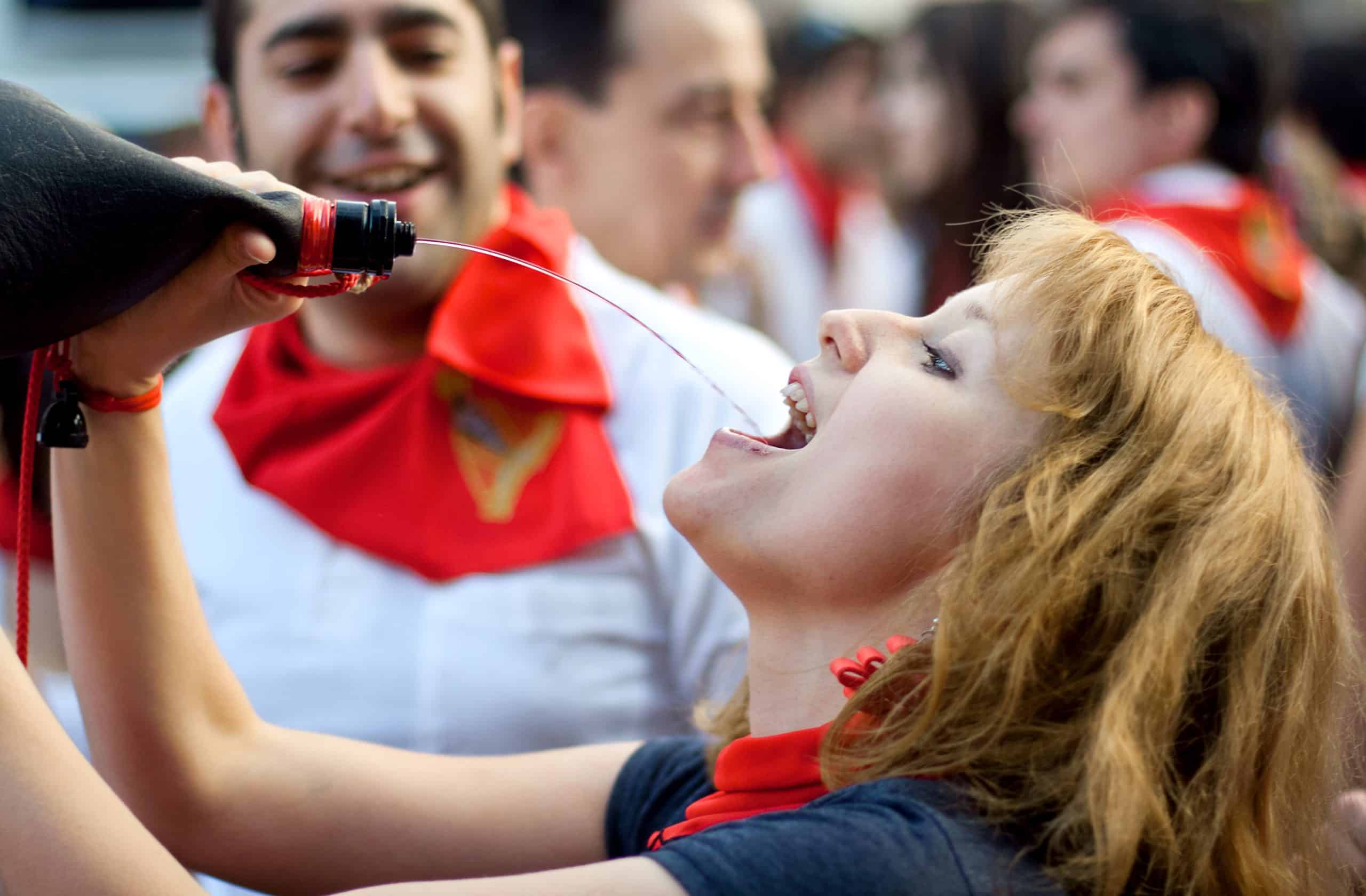
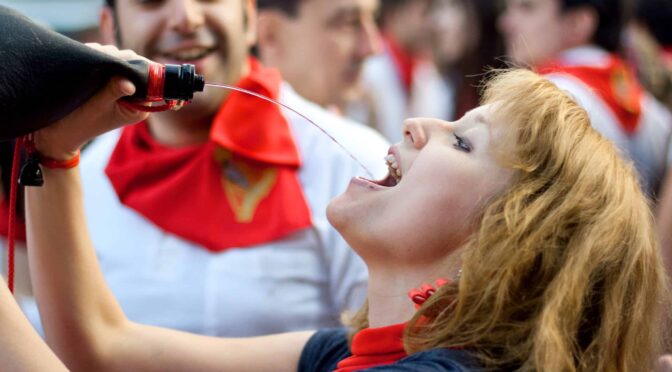
The right way to drink from a zahato or bota bag. Photo from Las Tres ZZZ.
  • Wineskins, zahatos, or bota bags have been used by people for millennia as a way of transporting drinks and keeping them cool. While some skins are large – the size of the animal they are made from and can carry some 120 liters (about 30 gallons) – zahatos and bota bags are meant to be carried by individuals. They are much smaller, holding between 1 and 4 liters (1/4 to 1 gallon), depending. Traditionally, zahatos or bota bags were used exclusively for wine. These days, with latex linings, they can be used to hold any drink.
  • The original zahatos – or Basque bota bags – were made of goatskin and soaked in resin inside to keep it water proof. The mouth was made of originally of wood and then bull horn. Today, these types can still be found but modern variants can also use latex to seal the inside. The mouth now is made of rubber in many cases or even more modern materials. Regardless, a red cord is attached to the mouth and wrapped around the bag to be used as a strap for carrying.
  • For zahatos with wax or resin linings, the lining takes on flavor from the wine: “Wineskins improve good wines and make poor wines good.” They have to be used all the time, or the resin will stiffen or worse; the worst thing one can do with a bota bag is not use it.
  • A distinctive feature of the zahato is that the mouth releases a small stream of wine. This means that you don’t have to put your lips to the mouth to drink. Instead, you can shoot the stream into your mouth from a distance. This is called the zurrust technique.
  • Perhaps the most famous brand of zahatos is Las Tres ZZZ of Pamplona. The company started in 1873 as Botería Eusebio Iglesias, owned by of course Eusebio Iglesias. He hired Gregorio Pérez from Huesca as an apprentice and Gregorio took over the business in 1902 when Eusebio retired. In 1914, Gregorio and his wife had triplet girls and he started branding his bags with the three ZZZ in their honor, after the Spanish word zagalas which means young girl or shepherdess.

A full list of all of Buber’s Basque Facts of the Week can be found in the Archive.

Primary sources: Las Tres ZZZ zahatoa, Kazeta.eus; Bota bag, Wikipedia; Zahato, Wikipedia; Zahatogintza, Gipuzkoa.eus

Basque Fact of the Week: How the Running of the Bulls Teaches Us About Crowds

This one is a bit technical and maybe the Basque connection is a little loose, but (nerd alert!) I think this is fascinating. Crowd dynamics or simulation is a field in which scientists try to understand how collections of people move and how that movement changes when conditions change. Think of crowds and how they might move normally on a sunny day versus when a tragedy strikes. It is very hard to study the second case as these are unexpected events. However, understanding them is critical for emergency response as it allows responders to better anticipate how the crowd will react in an emergency and public space designers how to design better spaces to mitigate the potentially dangerous consequences of out-of-control crowds. How does the Basque Country come into this? Well, the Running of the Bulls in Iruña (Pamplona) provides an excellent model for such crowds.

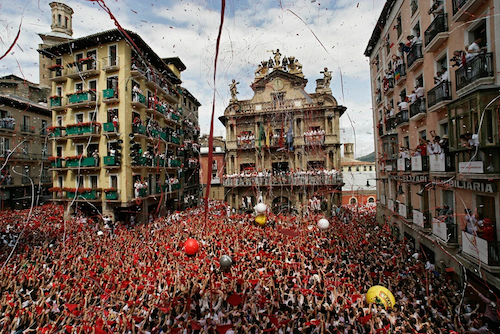
Crowd in Iruña (Pamplona) just before the Chupinazo, or when the Running of the Bulls begins. Photo from NBC News.
  • The Running of the Bulls is a unique situation in which people are fleeing from something, in this case the bulls of course. Understanding the way that crowds of people flee from danger is important for designing escape routes and managing crowds in emergencies. Further, in these situations, there is a high degree of competitiveness – people trying to outrun their neighbor to safety. However, it is quite hard to characterize the motion of such crowds as they are often unplanned, spontaneous events and, typically, there are more pressing concerns including the safety of the people. The Running of the Bulls affords a somewhat controlled and, importantly, repeated event in which such dynamics can be studied.
  • Two studies by Iker Zuriguel of the University of Navarra and his colleagues analyze the crowd dynamics of people at the running of the bulls. The first study, published in the Proceedings of the National Academy of Sciences in 2021, analyzed the dynamics of the crowd by considering the individual and collective velocities of the runners. A key concept in the study of crowd dynamics is the speed-density relationship. In normal situations, as the density of people increases, the pace at which the crowd moves slows. We are all familiar with this, as it happens all the time in our daily lives. It comes about because we are trying to avoid contact with others and thus have to slow down. However, as the density of the crowd decreases, we are all able to walk at our preferred pace.
  • The Running of the Bulls offers some challenges to the normal assumptions in crowd dynamics because there is a moving threat – the bull – that causes people to act differently. In particular, as a bull comes into the field of view of the runners, both the density and the velocity of the crowd increase. In some ways, this makes sense as people start running from the bull and into one another. But it is a very different behavior than what we experience when there is no threat. And, how fast a given runner wants to run changes with time. There is no default level that they would go if no-one else was there – it depends on if the bull is there or not.
  • However, there is a maximum in the speed-density relationship in that as the density gets high enough, the speed doesn’t get any faster. And this is because falls play an important role in mitigating the speed of the crowd. As people fall, they cause pileups and slow down everyone around them.
  • In a second paper published in 2025 in Nature, some of the authors follow up on the first study to consider the dynamics of massive crowds compared to smaller ones. They essentially derive a model of crowds that ignores the individual “properties” of each person and instead considers the collective behavior. This is what physicist do to describe fluid flows, for example, where they ignore the individual properties of, for example, water molecules and instead describe the collective.
  • Much like a physicist would do for fluids, the researchers considered the state of the crowd by considering how the density and speed of people varied with time and with position in the crowd. So, they essentially average out the behavior of individuals and turn them into a “field” that describes the local properties of the crowd.
  • One of the most interesting observations is that, when the crowd becomes dense, even before the bulls are released, groups of hundreds of runners move in concert, though they have not communicated at all with one another. Different groups move in different ways, but each cluster moves together, as if they are tied together somehow.
  • What’s more, the speed oscillates. That is, groups of people speed up and slow down with a frequency in time that is very regular. There is nothing to guide them or set this frequency, it comes about naturally in the crowd. The frequency in this case is about 18 seconds. Every 18 seconds, groups speed up and then slow down. Further, this motion is a swirling of groups of people within the crowd. It isn’t just them moving back and forth, but moving through the crowd. These oscillations arise because of the confinement of people: the smaller the space they are packed in, the bigger the oscillations.
  • Why does this matter? The authors suggest that the frequency of motion of crowds could be monitored in real time and that as they reach a critical value, that might signal that a dangerous crowd behavior might be about to occur, such as a stampede.

A full list of all of Buber’s Basque Facts of the Week can be found in the Archive.

Primary sources: Gu, François, Benjamin Guiselin, Nicolas Bain, Iker Zuriguel, and Denis Bartolo. “Emergence of collective oscillations in massive human crowds.” Nature 638, no. 8049 (2025): 112-119. Parisi, Daniel R., Alan G. Sartorio, Joaquín R. Colonnello, Angel Garcimartín, Luis A. Pugnaloni, and Iker Zuriguel. “Pedestrian dynamics at the running of the bulls evidence an inaccessible region in the fundamental diagram.” Proceedings of the National Academy of Sciences 118, no. 50 (2021): e2107827118.

Thanks to my colleague Anton Schneider for pointing me to these papers.