Bost sosen pupua, eta hamar sosen trapua.
A ten cent bandage for a five cent booboo.

These proverbs were collected by Jon Aske. For the full list, along with the origin and interpretation of each proverb, click this link.

Bost sosen pupua, eta hamar sosen trapua.
A ten cent bandage for a five cent booboo.

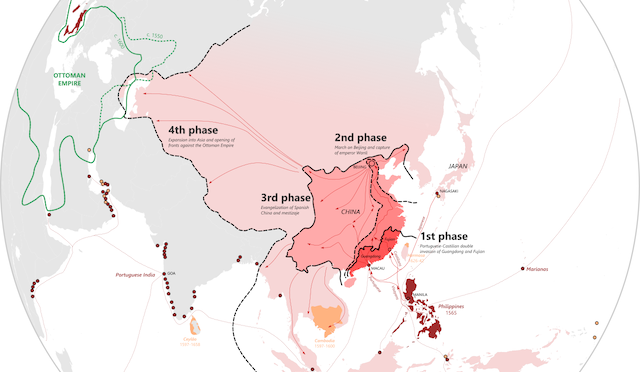
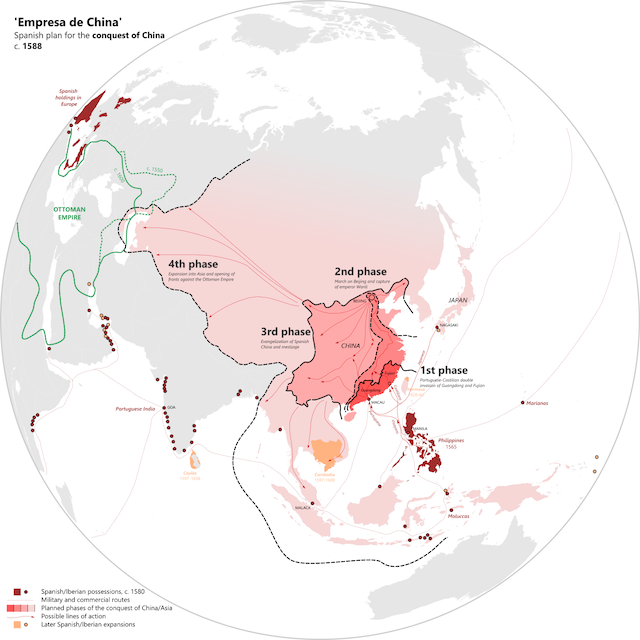
It seems inconceivable today, but in the late 1500s, the rulers of what is now Spain thought they could conquer China and then the rest of Asia with an army of 10,000 to 20,000 soldiers. They thought they could persuade Japan to join them. What’s more, this army was going to be primarily Basque. Leaders often overreach, thinking they are invincible, their ambitious getting the better of themselves (and, unfortunately, all of those around them); but this plan seems even more foolhardy than most.
A full list of all of Buber’s Basque Facts of the Week can be found in the Archive.
Primary sources: Los 12.000 vizcaínos que debían conquistar China para Felipe II by Javier Muñoz, El Correo; Empresa de China, Wikipedia; El plan más meticuloso y ambicioso de Felipe II para el Imperio Español: conquistar China con ayuda de Japón by Alejandro Alcolea, Xataka


Bihotzean dagoena, mihira irten.
What is in one’s heart, comes out of one’s mouth.

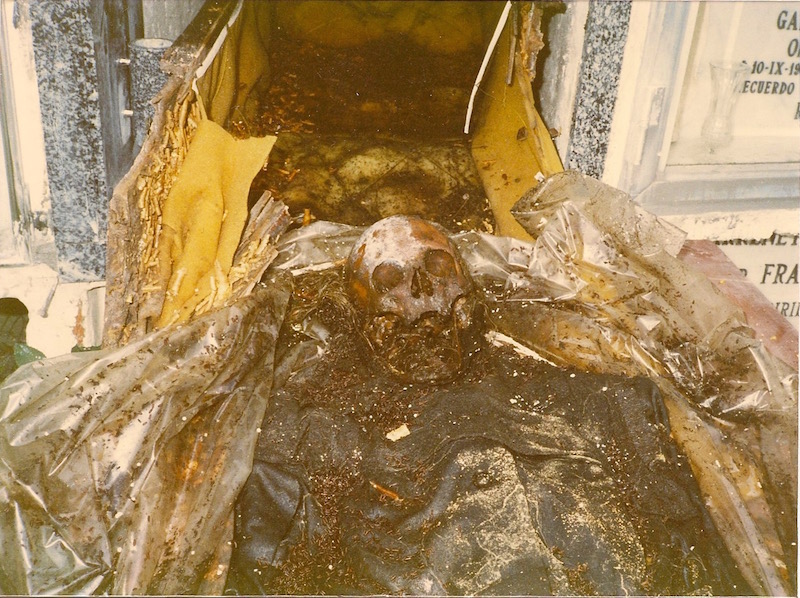
Death and taxes, the only things that can’t be avoided. Death eventually claims us all and it is no wonder then that people develop special beliefs around death. People develop special rituals around those who have died and the handling of their body. In the Basque Country, there are also beliefs and rituals connected with the soul of the dead, both to help them in their journey and to prevent them from being trapped on Earth. Many ancient Basque beliefs and traditions were ultimately either transformed or replaced by Christianity.
A full list of all of Buber’s Basque Facts of the Week can be found in the Archive.
Primary sources: Madariaga Orbea, Juan. Muerte. Auñamendi Encyclopedia. Available at: https://aunamendi.eusko-ikaskuntza.eus/en/muerte/ar-82465/


Bi etxetako txakurra, goseak jan.
A dog which belongs to two homes dies of hunger.

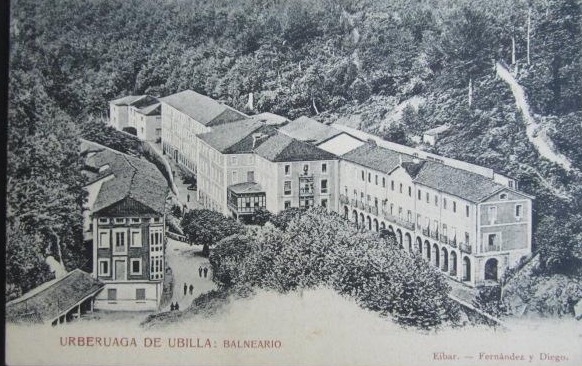
This one may be of interest to only me…
Driving along the highways in the heart of Bizkaia, there is a sign that appears on the side of the road that simply says Urberuaga, but there is nothing really there. It turns out that there used to be a quite renowned spa in the area, as the naturally thermal and gaseous waters were known to promote good health. It is an interesting story of the rise and demise of a once-prominent institution.
A full list of all of Buber’s Basque Facts of the Week can be found in the Archive.
Primary sources: UBILLA-URBERUAGA. Auñamendi Encyclopedia. Available at: https://aunamendi.eusko-ikaskuntza.eus/en/ubilla-urberuaga/ar-133553/;URBERUAGA DE UBILLA, Balneario de. Auñamendi Encyclopedia. Available at: https://aunamendi.eusko-ikaskuntza.eus/en/urberuaga-de-ubilla-balneario-de/ar-136282/; Urberuaga, el Balneario abandonado (Markina) by Gullivervan; El agua del balneario de Urberuaga podría abastecer a los 7.800 vecinos del Artibai by Mirari Artime, El Correo; El balneario abandonado de Urberuaga, Piensa en un lugar; URBERUAGA, Balneario de. Enciclopedia Auñamendi. Available at: https://aunamendi.eusko-ikaskuntza.eus/es/urberuaga-balneario-de/ar-136281/; Urberuaga de Ubilla, Estudio de sus aguas nitrogenadas by Doctor Don José Hernández Silva, Madrid, Imprenta de Ricardo Rojas, 1895


by Sancho de Beurko Association
A centenarian World War II veteran reflects on memory, sacrifice, and the effort to build the National Basque WWII Veterans Memorial in Gardnerville, Nevada.
At 104 years old, Regina “Reggie” Bastida is among the last living World War II veterans of Basque origin — and one of the few remaining voices of the generation that helped define modern America.
Born in Boise, Idaho in 1922 to Basque immigrant parents, Regina served with the U.S. Army Nurse Corps during World War II and belongs to the generation often called the “Greatest Generation.” Their service helped defend the democratic values that continue to shape the United States today.
In a recently-recorded interview in Boise, Regina shared a message that captures both the spirit of her generation and the purpose behind the National Basque WWII Veterans Memorial:
| “We want to remember our young men that went to war and gave their lives for our country.” — Second Lieutenant Regina “Reggie” Bastida U.S. Army Nurse Corps |
Her words remind us that remembrance is not only about the past — it is about the civic principles her generation stood for: duty, sacrifice, service, and democracy.
After more than a decade of research, the nonprofit homeland history association Sancho de Beurko has identified over 2,150 men and women of Basque descent who served during World War II across the United States and abroad. In many ways, their story reflects a familiar American narrative: immigrants — some of them not yet citizens — and the sons and daughters of immigrant families who stepped forward to serve both their country of adoption and the country of their birth during one of the defining moments of the twentieth century.
Today, the project has reached an important milestone. The Town of Gardnerville, Nevada, has designated a site in Heritage Park for the memorial, and a conceptual design has been completed. The goal is to dedicate the memorial before the end of 2026, ensuring that the service of this generation is honored while their voices can still guide us.
“Echoes of two wars, 1936-1945” aims to disseminate the stories of those Basques and Navarrese who participated in two of the warfare events that defined the future of much of the 20th century. With this blog, the intention of the Sancho de Beurko Association is to rescue from anonymity the thousands of people who constitute the backbone of the historical memory of the Basque and Navarre communities, on both sides of the Pyrenees, and their diasporas of emigrants and descendants, with a primary emphasis on the United States, during the period from 1936 to 1945.
THE AUTHORS
Guillermo Tabernilla is a researcher and founder of the Sancho de Beurko Association, a non-profit organization that studies the history of the Basques and Navarrese from both sides of the Pyrenees in the Spanish Civil War and in World War II. He is currently their secretary and community manager. He is also editor of the digital magazine Saibigain. Between 2008 and 2016 he directed the catalog of the “Iron Belt” for the Heritage Directorate of the Basque Government and is, together with Pedro J. Oiarzabal, principal investigator of the Fighting Basques Project, a memory project on the Basques and Navarrese in the Second World War in collaboration with the federation of Basque Organizations of North America.
Pedro J. Oiarzabal is a Doctor in Political Science-Basque Studies, granted by the University of Nevada, Reno (USA). For two decades, his work has focused on research and consulting on public policies (citizenship abroad and return), diasporas and new technologies, and social and historical memory (oral history, migration and exile), with special emphasis on the Basque case. He is the author of more than twenty publications. He has authored the blog “Basque Identity 2.0” by EITB and “Diaspora Bizia” by EuskalKultura.eus. On Twitter @Oiarzabal.
Josu M. Aguirregabiria is a researcher and founder of the Sancho de Beurko Association and is currently its president. A specialist in the Civil War in Álava, he is the author of several publications related to this topic, among which “La batalla de Villarreal de Álava” (2015) y “Seis días de guerra en el frente de Álava. Comienza la ofensiva de Mola” (2018) stand out.
The National Basque WWII Veterans Memorial is envisioned as the first and only national monument in the United States dedicated exclusively to Basque-American World War II veterans. More importantly, it is intended as a civic space where future generations can reflect on the values that Regina’s generation embodied.
Honoring this generation is also a race against time.
Projects like this are never the work of a single organization or community. They are built through the commitment of people who believe that remembrance matters.
For those who feel moved by Regina’s message, there are many ways to help bring this tribute to life — whether by supporting the project directly, sharing its story, or helping connect it with others who care about preserving this chapter of American history.
Those who wish to support the Memorial may do so through our secure online donation page:
https://my.cheddarup.com/c/national-basque-wwii-veterans-memorial/items
Because as Regina reminds us, the purpose is simple:
We must remember them.
If you are a relative of a Basque WWII veteran and you would like to find out if he or she is on the list, please contact the project researchers: sanchobeurko@gmail.com


Beti ordu duena, beti berandu heldu dena.
The one with time to spare is always the one who arrives late.

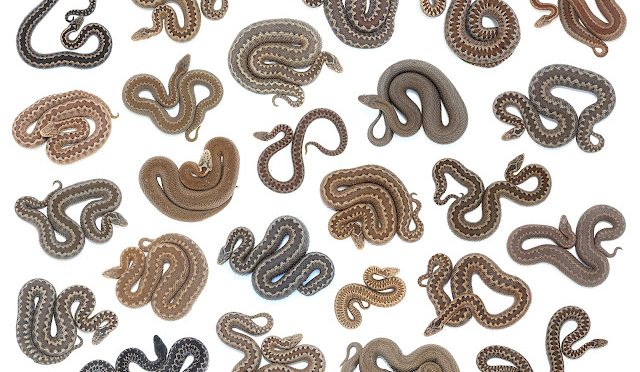
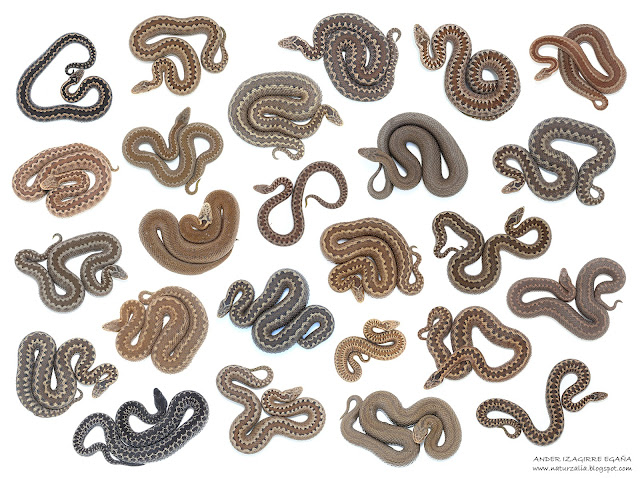
My mom tells a story of my dad where they were out in the countryside working, spending the night camping in the field. Somehow, my dad became aware of a rattlesnake nearby and freaked out, dousing the whole area with gas and lighting it on fire to kill the snake. My mom said it was because he was deathly afraid of snakes because of a “red snake” he knew about in the Basque Country.
I admit, I was a bit skeptical about this existence of this “red snake,” so I asked, and indeed it is a thing: the sugegorri – literally “red snake” – is a viper native to the Basque Country.
A full list of all of Buber’s Basque Facts of the Week can be found in the Archive.
Primary sources: Most are linked directly in the post.


Beti on nahi duena, maiz gaizki.
The one who wants everything to be just right, often gets just the opposite.

